Product updates worth reading
A short email when we ship something useful for shop-floor teams.
You can unsubscribe anytime. By subscribing you agree to our Privacy Notice.
The discussion about an order stays on the order.
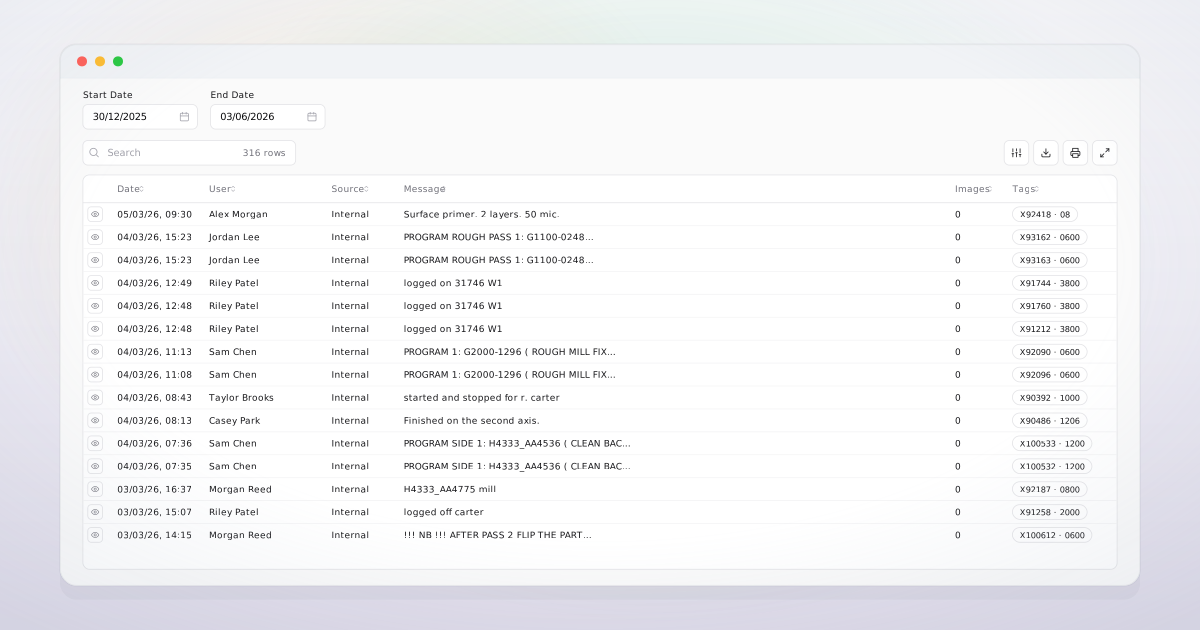
An operator on a production order asks whether a part dimension is a 2mm or a 3mm clearance. The question is posted on the production order, and the planner's answer lands underneath it. The operator on the next shift opens the order and reads the decision and the reasoning, in the same place the order lives.
A message is a threaded comment that stays with the thing it is about: an item, project, production order, routing line, purchase order or line, sales order or line, or a budget revision. Each is marked internal or external, keeping the team conversation separate from exchanges with a customer or supplier. One message can carry several tags, down to a single routing line within an order, so a discussion about one line does not crowd the whole order's history. Posting from inside a record fills the tag automatically.
The next operator on the part opens the production order and finds the dimension question and its resolution, with the time and the author intact. A planner picking the order up reads the customer's clarification at the top of the order. The audit question “when was that change to the spec agreed, and by whom” is answered from the order's own page.
Describe how your team communicates today and it will tell you what changes.
A thread often turns into a task, organised by space and topic.
Messages, tasks, and documents are the shared records layer.
Threads tag production orders and routing lines and show on the operation.
Book a meeting and we will look at how your work centres post today, then show the queue, load, and operation views your planners and leads can read from any screen. If it is not a fit, we will say so.
A short email when we ship something useful for shop-floor teams.
You can unsubscribe anytime. By subscribing you agree to our Privacy Notice.