Product updates worth reading
A short email when we ship something useful for shop-floor teams.
You can unsubscribe anytime. By subscribing you agree to our Privacy Notice.
Shortages surface the day demand is booked.
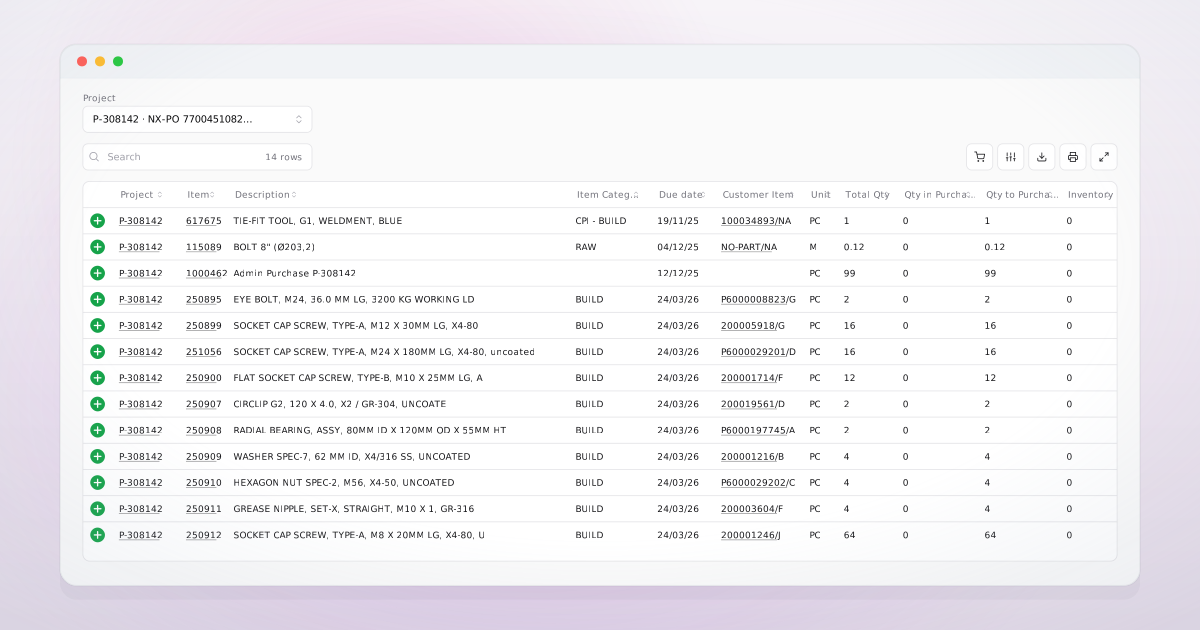
A long-lead casting nobody ordered is the reason a project ships three weeks late. The purchaser knew the project needed it but the demand was on a planned production order, the stock was zero, the vendor's lead time was 14 weeks, and no list pulled the three facts together until a planner walked the floor in week 11 and asked. One list does the comparison. The casting shows as uncovered the day demand is booked, and the order goes in week one.
Purchase reads production demand from planned, firm-planned, and released orders and compares it against inventory and what is already on order. Items that come up short go on a shortage list; the purchaser picks lines, drops them in a cart, and creates the purchase order with requested and promised dates pre-filled from the component due date minus the vendor's transport time. Items already on open orders sit on a separate list sorted by promised date, with past dates in red and late risks obvious. Long-lead items get a fourth list, the one a purchaser scans at the start of each week to catch the next casting before week eleven.
Every line carries the project tag from the order header, so the posted invoice lands in the right project's actuals without a journal correction in finance later. A late vendor surfaces three weeks before the part is needed, and the customer hears about a slip before they ask. The stand-up runs off the list: what we ordered, what is coming in, what is at risk.
Describe how you buy and receive today and it will tell you what would change.
Demand comes from the component lines on open production orders.
Posted purchase invoices and credit memos land in Budget Revision via the project tag.
A non-conformance on a received line is raised from the order and badges it across the purchase views.
Book a meeting and we will look at how you buy against demand today, then show Items to Buy, Items to Receive, and Long Lead Items reading from your posted purchase orders. If it is not a fit, we will say so.
A short email when we ship something useful for shop-floor teams.
You can unsubscribe anytime. By subscribing you agree to our Privacy Notice.